
Why the Verdict Form Is the Missing Key in Your Mock Jury Testing Strategy
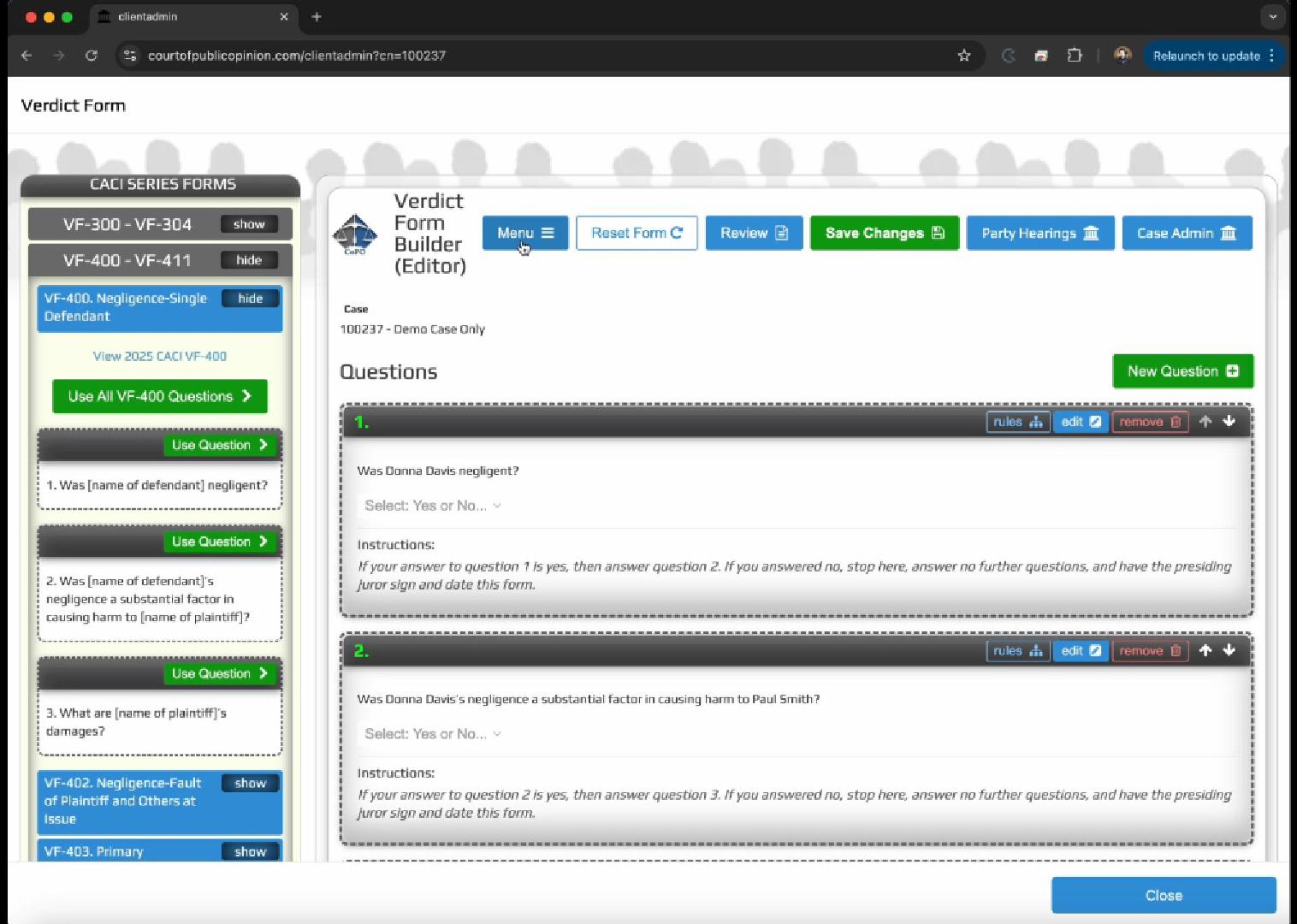
Most trial attorneys spend weeks preparing opening statements, rehearsing witness examinations, and fine-tuning exhibit presentations before running mock jury testing. But there is one document that shapes the entire outcome of jury deliberation — and it is almost always an afterthought: the verdict form.
Your verdict form is not just a summary of the questions a jury must answer. It is the roadmap jurors use to navigate deliberation. How it is structured, what it asks first, and how it frames damages can dramatically alter jury perception and, ultimately, your litigation outcome.
What the Verdict Form Does to Jury Deliberation
Research published in Diverging Decisions: A Comparison of Jury Verdict Procedures confirms that different verdict form structures produce measurably different deliberation patterns among mock juries. Jurors do not simply vote on what they believe — they follow the architecture of the questions they are given. The sequence of liability, causation, and damages questions shapes how jurors discuss the case, what evidence they weigh, and how they reach consensus.
A well-designed verdict form guides jurors toward the factual findings that support your case theory. A poorly designed one can invite jurors to anchor on damages prematurely or conflate separate liability questions — both of which corrupt your jury feedback and mislead your litigation strategy.
How Mock Jury Testing Exposes Verdict Form Weaknesses
The purpose of mock jury testing is not just to hear a verdict — it is to understand how jurors reason through your case. When you include a properly structured verdict form in your mock session, you get two critical insights that you cannot get any other way:
1. How Jurors Interpret Each Question
Mock jurors reveal exactly where verdict form language confuses them, where they disagree on the legal standard being applied, and which questions they answer emotionally rather than analytically. This is invaluable jury feedback that lets you fix ambiguous language before it reaches the actual courtroom.
2. How Verdict Form Order Affects Damages
The sequence in which liability and damages questions appear has a direct impact on the awards mock juries return. If damages questions appear before full liability deliberation is complete, jurors tend to inflate award numbers. If they appear after a clear liability finding, numbers tend to be more grounded. Testing this sequence during case testing gives you data, not guesswork, about how to structure your actual verdict form submission.

Why Most Mock Jury Testing Gets This Wrong
According to Courtroom Sciences, the two most common failures in mock trial research are lack of reliability and lack of validity. One major source of both problems is the verdict form itself. When mock trial conductors hand jurors a rushed or incomplete verdict form — or skip it entirely — the deliberation data is corrupted before it begins.
As Attorney at Law Magazine notes, in a proper mock trial “the content should be enough to inform the mock jurors so they can answer the verdict questions.” This places the verdict form at the center of every mock jury exercise — not at the end of it.
Building Your Verdict Form Into Pre-Trial Research
The attorneys who get the most from mock jury testing treat the verdict form as a living document throughout pre-trial research. Here is how to integrate it effectively:
Start with the Verdict Form, Not the Opening Statement
Before writing a single line of your opening statement, draft the verdict form questions you expect the judge to submit to the jury. These questions define your case narrative. Every argument should lead a juror closer to answering those specific questions in your favor.
Test Verdict Form Language with Mock Jurors
Run your verdict form preparation through at least one mock session before trial. Ask mock jurors to read each question aloud and explain what they think it is asking. You will immediately discover which terms are ambiguous and which questions generate confusion your opponent can exploit.
Use Deliberation to Evaluate Jury Instructions
The verdict form and jury instructions are inseparable. Mock jurors who deliberate with both documents will show you exactly where instructions fail to clarify verdict form questions — and where opposing counsel language might send jurors in the wrong direction.
Monitor Deliberations in Real Time
At Court of Public Opinion, attorneys can monitor juror deliberations as they happen — watching how mock jurors work through each verdict form question. This live observation is where the most valuable trial strategy insights surface: which arguments are being repeated, which are being ignored, and which are generating the most debate.
Verdict Forms and Damages Anchoring
One of the most powerful applications of mock jury testing is damages calibration. Defense attorneys have confirmed that showing jurors a filled-in verdict form with specific defense-favorable amounts during closing is an effective anchoring technique. Plaintiff attorneys know the same principle works in reverse.
But you cannot optimize this technique without first testing how different damage amounts and anchoring strategies land with a representative mock jury. Jury perception of what constitutes a reasonable award varies significantly by venue, case type, and how the question itself is framed. Your litigation strategy for damages must be built on actual data from case testing, not on what worked in someone else’s case last year.
Analyzing Results with Behind the Verdict Tools
After mock jurors deliberate and render a verdict, the analysis is just beginning. Court of Public Opinion’s Behind the Verdict Tools allow attorneys to dig into jury feedback at the question level — understanding not just how mock jurors voted, but why they voted that way on each specific verdict form question.
This is where pre-trial research becomes a genuine competitive advantage. You receive structured post-verdict questionnaire data, juror perception ratings, and deliberation notes tied directly back to your verdict form language. Explore how this analysis works at the Behind the Verdict page.
Start Testing Your Verdict Form Before Trial
Every attorney should complete at least one round of mock jury testing that includes a full verdict form deliberation before going to trial. The insights you gain will sharpen your case narrative, refine your damages strategy, and close the gap between what you think the jury will do and what they will actually do.
Register as a client to get started, review available hearing formats, or schedule a hearing today. Questions? Visit our FAQ section for answers.
Sources
- Diverging Decisions: A Comparison of Jury Verdict Procedures — PMC/NCBI (2025)
- Why Mock Trials Fail: The Better Approach for Jury Research — Courtroom Sciences
- Legal Focus Groups v. Mock Trials: Similarities, Differences, and Purposes — Attorney at Law Magazine
- The Apex Approach to Arguing Pain and Suffering — Tyson & Mendes
- New York State Trial Lawyers’ Jury Trial Core Strategies — Dae Ryun Law