
CoPO

Loading

Support

How To Whitelist Safe Senders and Domains

What Does Whitelist Mean?

You may be wondering what the whitelist meaning is at all, but that doesn’t mean you can’t benefit from knowing how to whitelist an email. Whitelisting an email involves telling your email provider that you want emails from that sender to be allowed into your inbox rather than being filtered into spam.

It’s therefore important to understand what is whitelist in order to be able to avoid the problem of having emails removed unnecessarily and forcing you to look through spam for potentially important communications. A whitelist email address will always be allowed into your inbox, ensuring that your email account is working for you as much as possible.

Not being able to whitelist email senders renders you unable to get notifications when you receive important emails that you need to read. Whatever email provider you use, it’s crucial to understand how to whitelist an email in order to make sure that nothing falls through the cracks.

How To Whitelist an Email in Gmail

If you’re using Gmail as your email provider, it’s easy to set things up so that a given sender is whitelisted for all future communications. The Gmail whitelist process can be done quickly through the web client:

  1. Click the settings button (in the top-right corner of the screen), then select “Settings” from the resulting drop-down menu.
  2. Navigate to the tab labeled Filtered and Blocked Addresses to access information about your existing filters.
  3. Select Create a new filter and enter the emails or domains you want to whitelist.
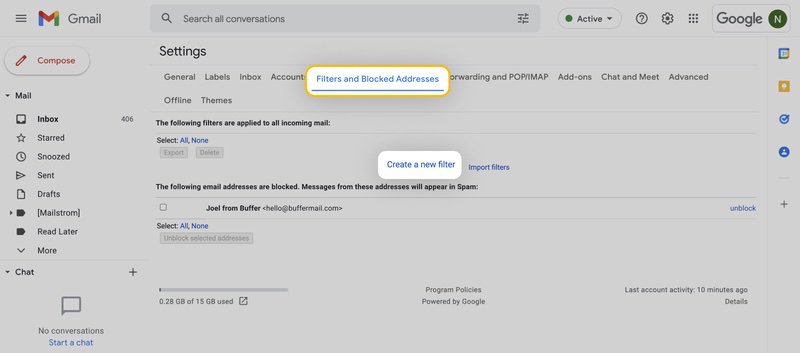
To whitelist a single email address, for example, type the entire address. On the other hand, if you’re trying to whitelist every sender from a certain domain, type the domain alone, such as “@yahoo.com”. This will tell Gmail to approve every message from a Yahoo sender.

  1. Click Create filter to approve the new filter, then mark Never send to Spam to whitelist every email within the filter. You can also choose to Star these emails, apply a given label, or mark them as important.

Whitelisting in Gmail mobile app

  1. Open the Gmail application.
  2. Navigate to Spam or Junk folder.
  3. Click on the message you wish to view.
  4. Select the option Report not spam.
  5. You will now receive messages from this sender as normal.

How To Whitelist an Email in Outlook

Whitelisting a domain or specific email address in Outlook.com is just as easy and works by adding the address or domain in question to a group called Safe senders. An address that has been added to safe senders will be pushed to your inbox regardless of your spam filters. To add an address or domain to safe senders:

  1. Click on Settings, then View all Outlook settings.
  2. Go to Junk email, then choose Safe senders and domains or Safe mailing lists to select the domain or email you want to whitelist.
  3. Enter the domain name or email address you wish to add to Safe senders. Make sure to include the @ character for domain names in order to only whitelist emails with the exact string of characters you entered (and nothing more).

Alternatively, you can simply add an individual email address that has sent you a message to your Outlook Contacts. Though they lead to the same result, this method is quicker and more efficient than manually entering information.

Whitelisting in Outlook mobile app

  1. Open Outlook Mobile App.
  2. Click on the message that you want to whitelist.
  3. Click on the three dots in the top right corner.
  4. Click Move to focused inbox.
  5. When the pop up screen comes up, click Move this and all future messages.

How To Whitelist an Email in Yahoo Mail

If you want to move a sender or domain name to your whitelist Yahoo Mail, the process is even easier than it is in the other service providers mentioned above.

As long as you have already received at least one message from the address in question, all you have to do is highlight that message in the Bulk folder and mark it as Not Spam. Once you have identified a single message from a given sender, the Yahoo Mail spam filters will automatically allow future messages from the same address into your inbox.

On the other hand, if the person you’re attempting to whitelist hasn’t yet sent you a message, you’ll need to go through the following steps to whitelist the address:

  1. Navigate to Settings icon, then click More Settings from the Yahoo Mail menu.
  2. Select Filters and hit Add new filters to enter information about the domain name or sender.
  3. From here, you can enter any string of text you want to whitelist in future emails. This could be anything from an email address or domain name to something you expect to be in the body of the message.

Yahoo Mail makes it much easier to whitelist a domain name or email sender once they’ve already sent a message to you that’s located in your Bulk folder, so consider asking the person you’re trying to whitelist to send you a test email in advance.

Whitelisting in Yahoo Mail mobile app

  1. Open Yahoo Mail Mobile App.
  2. Click on the sidebar.
  3. Click on the Spam folder.
  4. Find the email you wish to whitelist.
  5. Click Move and then click Inbox.
The One-Sided Ceiling: How Uber’s New Ballot Measure Disarms Accident Victims

1. Introduction: The Collision of Convenience and Accountability

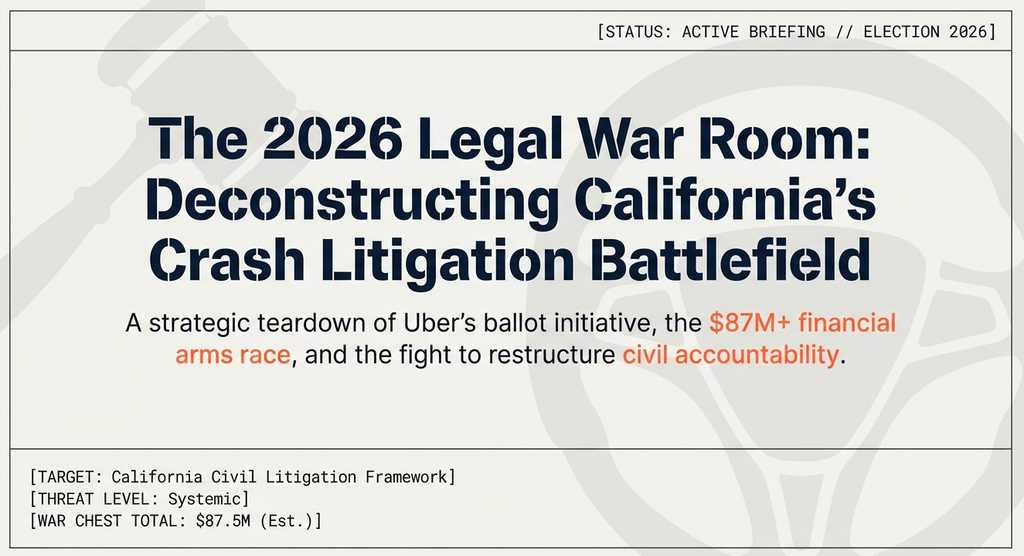
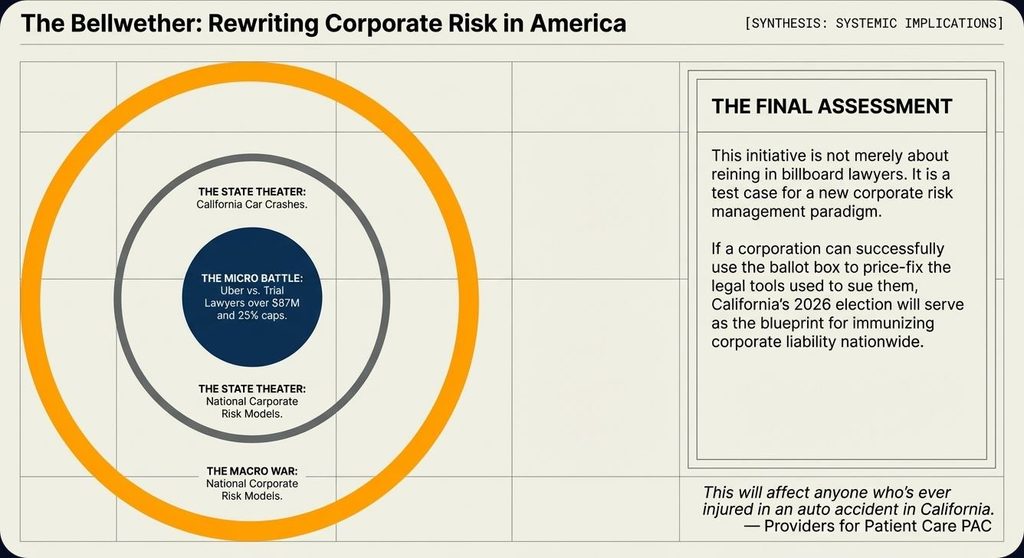
Imagine the sudden, visceral jolt of a t-bone collision at a suburban intersection. In the disorienting seconds that follow, a victim isn’t thinking about ballot initiatives or insurance actuarials; they are thinking about the mounting costs of surgery and the sudden loss of a paycheck. This moment of extreme vulnerability is the epicenter of a high-stakes political war. Uber is currently bankrolling a 2026 ballot initiative titled “A More Affordable California,” framed as a common-sense rescue mission to protect victims from “predatory lawyers” and “inflated bills.”

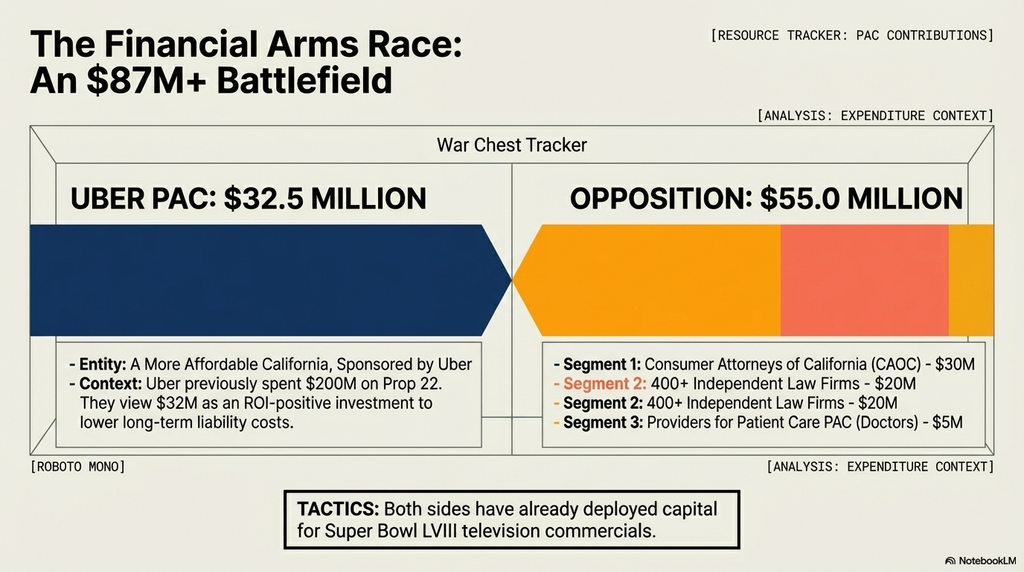
But beneath the populist rhetoric lies a calculated corporate maneuver. Uber’s strategy relies on a classic political sleight of hand: solving a genuine problem—inflated medical billing—with a solution that effectively dismantles the victim’s legal engine. The financial scale of this fight reflects its gravity; state records show Uber has already poured $32.5 million into the measure, while a coalition of trial lawyers and medical providers has committed roughly $55 million to kill it. What is being sold as “affordability” may, in fact, be the systematic removal of the average citizen’s “key to the courthouse.”

2. Takeaway 1: It’s Not Just About Uber (The Universal Scope)

The most dangerous misconception about the “A More Affordable California” initiative is that it only regulates ride-sharing. In reality, this is a total overhaul of the liability system for every vehicle crash in the state. Whether you are struck by an Uber, a delivery van, or a private commuter, your ability to recover damages will be dictated by these new rules.

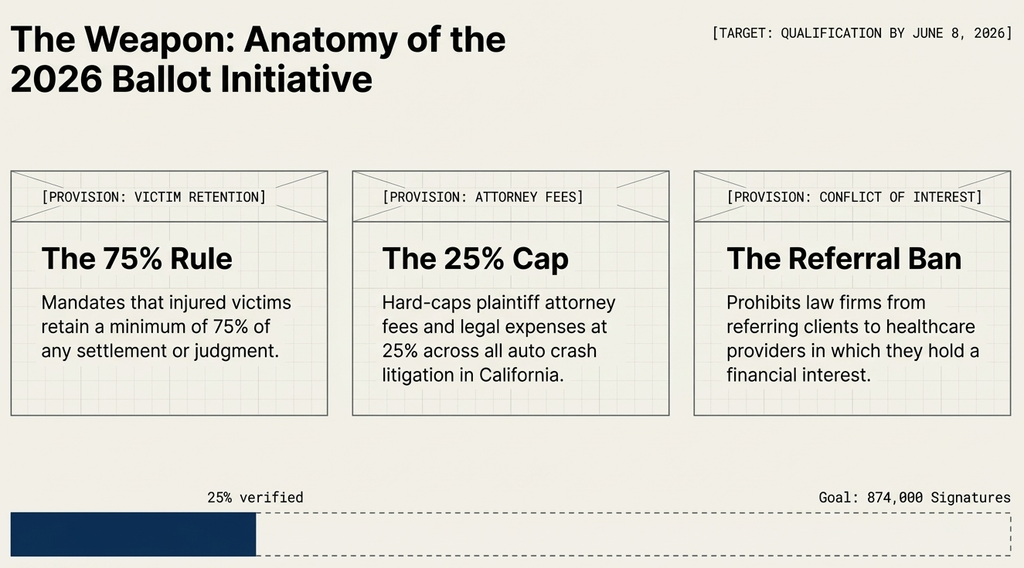
The initiative’s power lies in its simplicity. By pitching a “75% guarantee” for victims, the campaign leverages what legal scholars call a “bumper sticker quality” that masks a radical narrowing of constitutional rights. It is an attempt to rewrite the rules of the road for 40 million people under the guise of corporate “reform.”

“This measure could backfire for Uber, but it’s certainly possible that California voters will approve (the company’s) initiative because it has a ‘bumper sticker quality’ to it,” said Stanford University law professor Nora Freeman Engstrom.

3. Takeaway 2: The Hidden Math of the “75% Rule”

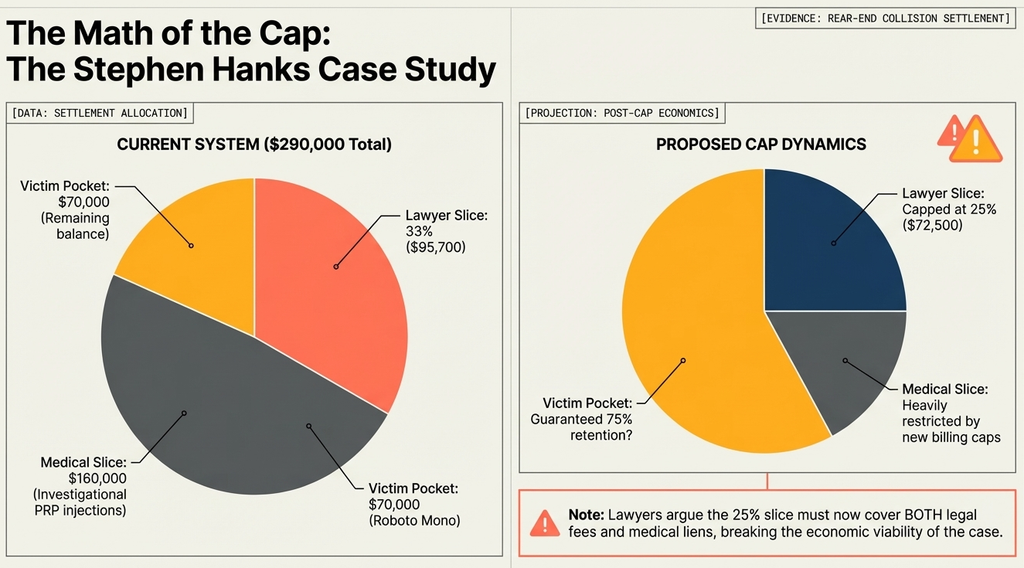
The centerpiece of the measure is the requirement that victims retain at least 75% of any settlement. It sounds protective until you look at the math of the remaining 25%. In the current system, a lawyer’s fee (usually 33% to 40%) is separate from the “costs” of the case—the tens of thousands of dollars required to hire accident reconstruction experts, specialized surgeons for testimony, and private investigators.

Under Uber’s measure, that 25% must cover both the attorney’s fee and every single litigation cost. This creates a literal disarmament in the courtroom. While a victim’s legal team is forced to work within a capped, shrinking budget, a multibillion-dollar corporation like Uber faces no such restriction, allowing them to spend unlimited sums on high-priced defense teams and exhaustive internal investigations to outlast the victim.

“These limits would apply only to the injured person’s side of a case. Large corporations and insurance companies would continue to spend without restriction on defense teams, internal investigations, and prolonged litigation.” — Avrek Law

4. Takeaway 3: The “Fine Print” Trap of Medical Liens

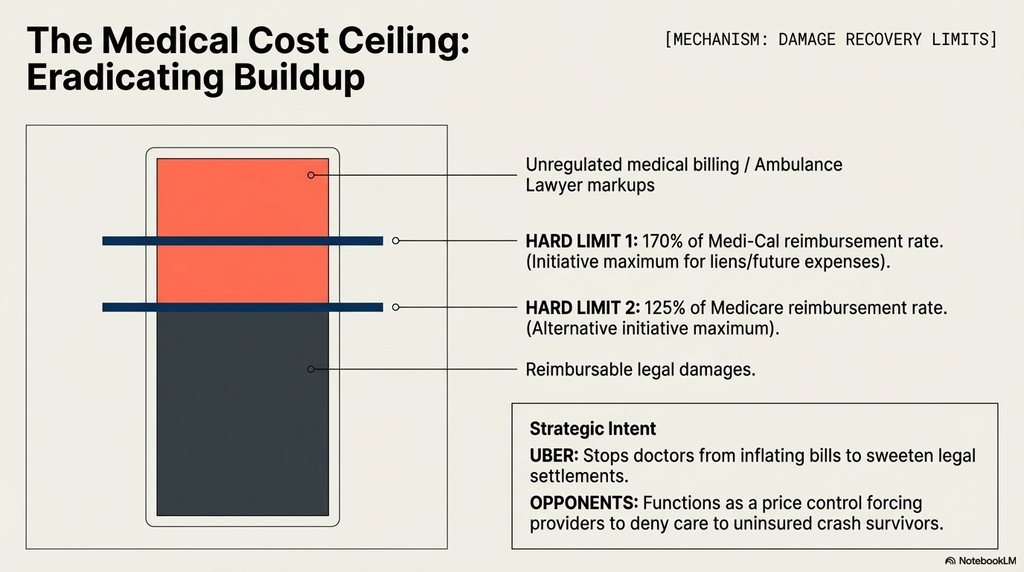
To combat what it calls “medical buildup”—the practice of inflating bills to sweeten settlements—the measure ties all medical recoveries to national databases, specifically 125% of Medicare or 170% of Medi-Cal rates. But the real “fine print” is found in the initiative’s “convoluted language,” as Professor Engstrom describes it. Legal analysts warn that the measure is written such that medical expenses and liens might actually be forced to come out of the attorney’s 25% share, rather than being deductible from the total settlement.

This creates a paradox: if the attorney’s 25% share is exhausted by medical liens and expert witness fees, there is no money left to pay the lawyer. Uber claims this prioritizes the victim, but the structural reality suggests it may simply prioritize the elimination of the victim’s advocate.

“Californians deserve a system that prioritizes victims over billboard lawyers,” said Adam Blinick, Uber’s director of Public Policy and Communications for the U.S. and Canada.

5. Takeaway 4: The Synergy of Lowering the Floor and the Ceiling

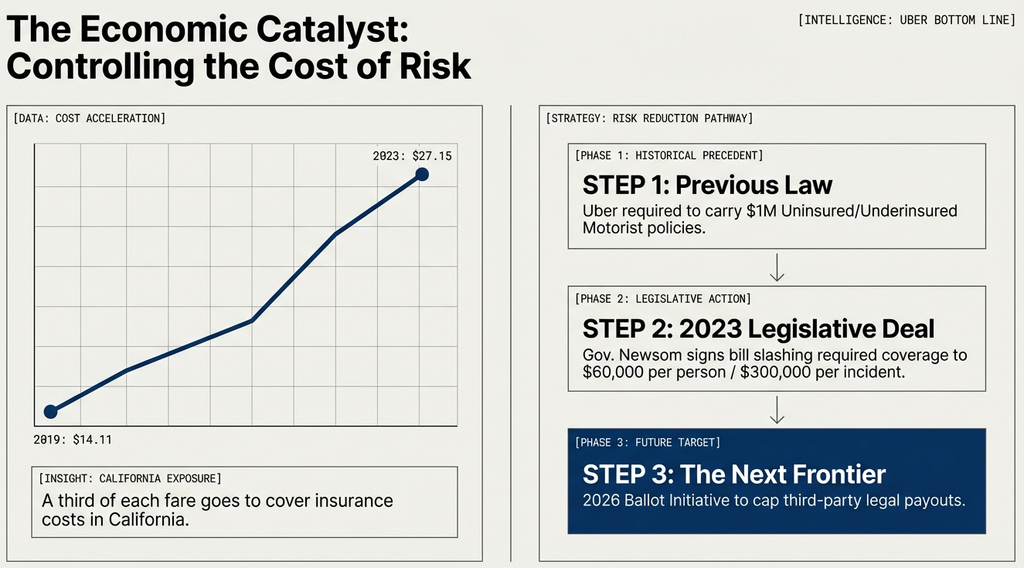
This ballot measure is the second phase of a broader business strategy to insulate Uber from the costs of human error. Between 2019 and 2025, the average Uber fare in California nearly doubled, climbing from roughly $14 to over $27. Uber has been transparent with investors: insurance costs consume roughly one-third of every fare.

The synergy of their political maneuvering is unmistakable. First, in 2025, Uber successfully lobbied for a legislative deal that lowered the “floor”—slashing the required insurance minimums for uninsured/underinsured motorists from $1 million down to a mere $60,000. Now, they are attempting to lower the “ceiling” by capping what they can be sued for. By driving down the cost of liability, Uber aims to shore up its bottom line at the expense of those catastrophically injured.

6. Takeaway 5: The “Muzzle” Effect on Complex Cases

The most chilling consequence of a hard 25% cap on fees and costs is the “muzzle” effect. Complex cases require significant upfront financial risk from attorneys working on contingency. If the budget for experts is capped, lawyers simply cannot afford to prove complicated liability.

Consider the case of Stephen Hanks, who was rear-ended by an Uber driver. He received platelet-rich plasma injections—an “investigational procedure” that Uber’s narrative might label as “unnecessary medical buildup.” To Hanks, however, those injections were the only thing that finally fixed his shoulder. Under the current system, his $290,000 settlement left him with $70,000 after medical bills and fees. Under the new measure, scholars argue a firm might never have taken his case in the first place, leaving him with $0 and a permanent injury.

“In reality, Uber’s ballot initiative won’t protect victims, it will muzzle them,” wrote law professors Nora Freeman Engstrom and Brianne Holland-Stergar.

7. Conclusion: A Question of Public Safety and Access

The battle over “A More Affordable California” is just the opening salvo in a larger legal war. In retaliation, trial lawyers have introduced their own measures, seeking to designate ride-share companies as “common carriers” with higher safety duties and to increase liability for sexual assault reporting.

As voters approach the 2026 ballot, they must decide if the promise of slightly lower fares and premiums is worth a fundamental shift in the civil justice system. Is the goal truly to protect the victim, or is it to ensure that when a catastrophic accident occurs, the corporation responsible is the only one in the room who can afford to speak?

Behind the Verdict: What Jurors Really Think

How Court of Public Opinion reveals not just what jurors decide, but why

When a jury reaches a verdict, the decision is only part of the story. What matters just as much is how jurors got there: what evidence captured their attention, which testimony they trusted, and whether different groups of jurors reacted in different ways. Without that insight, attorneys are left making educated guesses about what resonated and what did not.

Court of Public Opinion eliminates that uncertainty. Our tools are designed to look beyond the verdict, providing data on juror attention, credibility assessments, and demographic patterns. These insights not only strengthen trial preparation but also provide attorneys with leverage in mediation and arbitration, where understanding strengths and vulnerabilities can drive settlement outcomes.

Rate-My-Case / Relevancy Meters

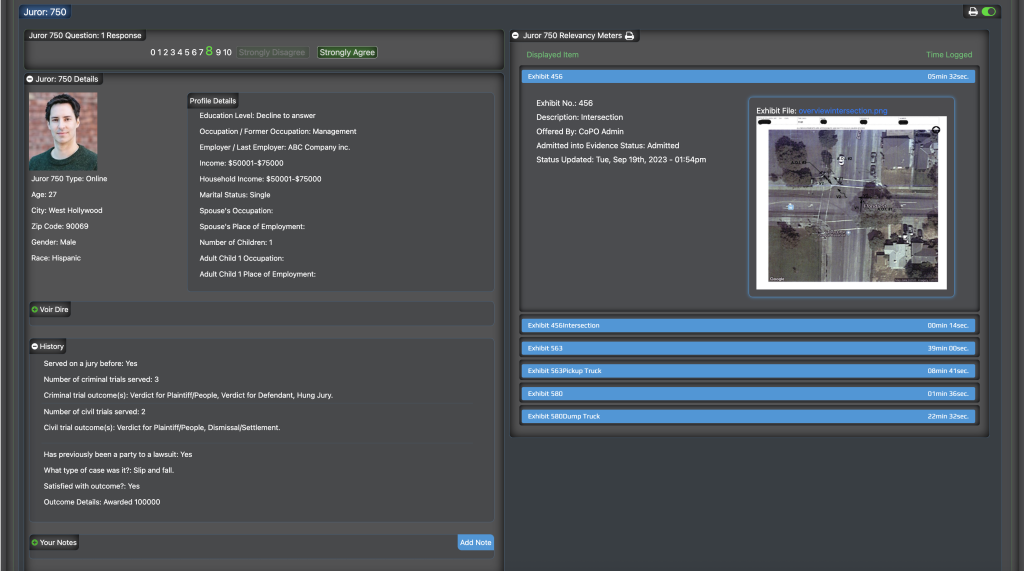
In a recent focus group involving a fire injury case, the central question was who bore the greater share of responsibility: the property owner or the contractor who performed the electrical work. Using CoPO’s Rate-My-Case, jurors individually rated the persuasiveness of the testimony and evidence. Counsel expected jurors to place primary fault on the property owner. Instead, a significant portion of jurors pointed to the contractor, noting that the wiring appeared careless and poorly maintained. That feedback allowed the attorney to rebalance the way liability was presented, emphasizing safety obligations while anticipating juror skepticism about the contractor’s role.

Demographic Breakdowns

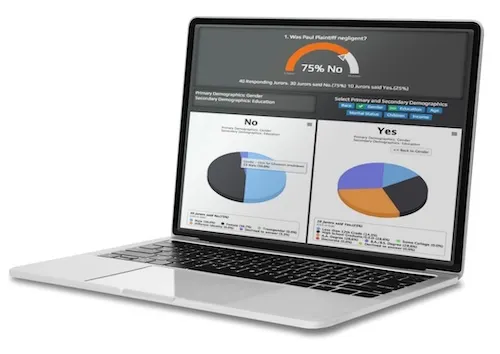
Court of Public Opinion’s Demographic Breakdowns provided clarity on how jurors from different backgrounds viewed the dispute. Overall, the panel leaned toward awarding damages, but the breakdowns showed that older jurors and women were significantly more convinced by the plaintiff’s evidence, while younger jurors were more skeptical about whether the owner should be held primarily responsible. This insight allowed counsel to refine voir dire strategy for trial and gave them a realistic understanding of how different audience compositions might affect outcomes.

Post-Verdict Questionnaire

After the fire case deliberations concluded, jurors were invited to complete Court of Public Opinion’s Post-Verdict Questionnaire. Their responses shed light on why they reached their conclusions and how they weighed the evidence overall. Some jurors emphasized the photographs of the burned wiring as the most persuasive factor, while others pointed to the contractor’s testimony as leaving doubts unresolved.

After trial, attorneys often try to speak with jurors to learn what influenced their decision, but those conversations are informal and inconsistent. The Post-Verdict Questionnaire gave counsel a more structured, reliable record of juror perspectives.

These responses highlighted themes that had not fully emerged during deliberation. In mediation, the feedback gave attorneys concrete talking points to address perceived weaknesses. In trial preparation, it helped them anticipate where jurors might need clearer explanations or stronger evidence.

Why It Matters

Litigation is resource-intensive and unpredictable. Mediation and arbitration may be more streamlined than trial, but persuasion still matters. By looking behind the verdict, CoPO helps attorneys see not only what jurors decided but also why. In the fire case, Rate-My-Case, Relevancy Meters, and Demographic Breakdowns worked together to provide a full picture of juror reasoning. With that knowledge, counsel was able to adjust arguments, strengthen negotiation strategy, and approach trial with greater confidence.

Litigation is costly and complex. With CoPO, attorneys can access reliable jury feedback cost-effectively, then use it to present more effectively at trial and to shape negotiation strategy in mediation and arbitration.

To see how CoPO’s tools can strengthen your next case, contact us for a demonstration.

Written by Candy Elliott