
Why Jury Perception Decides Cases Before Attorneys Ever Set Foot in Court
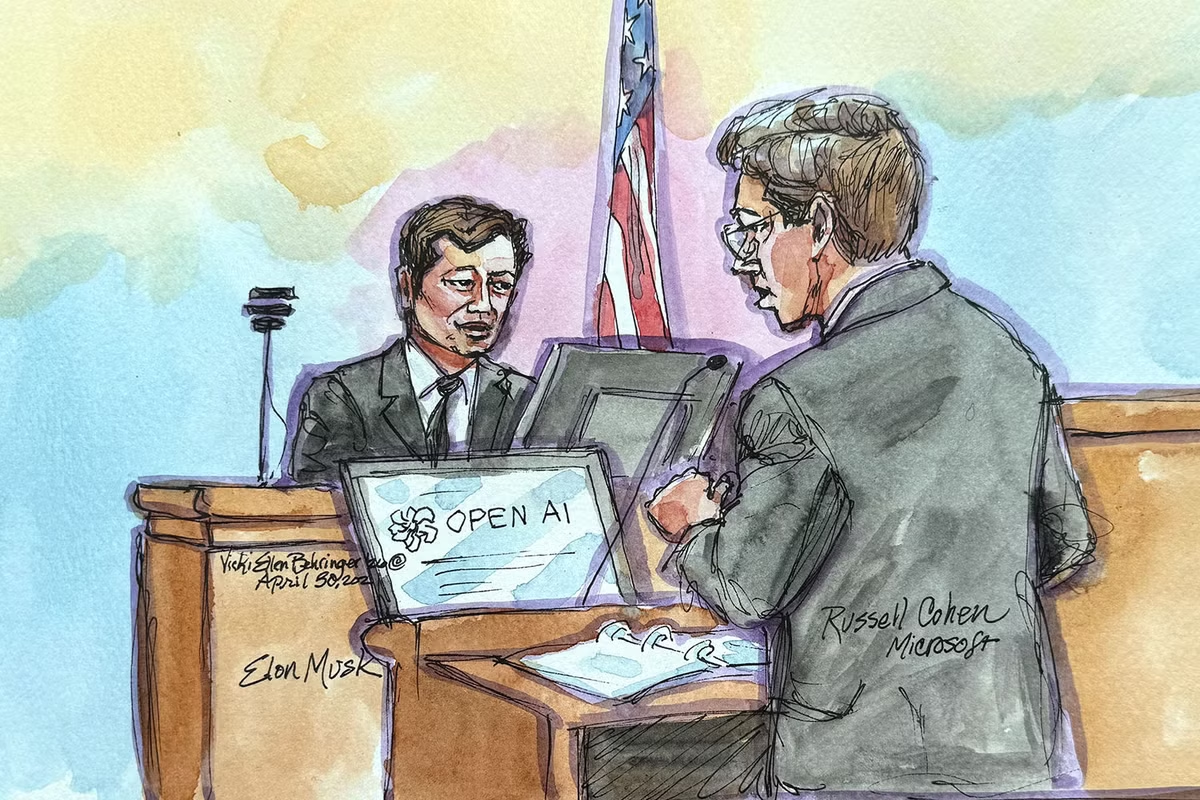
Billionaires and tech giants are rewriting what pre-trial strategy looks like in 2026. When Elon Musk recently accused an OpenAI attorney of trying to “trick” jurors during a high-stakes California federal trial, the moment underscored something trial consultants have known for years: the only thing more dangerous than a weak case is an attorney who does not understand how jurors are already perceiving it.
Jury perception is not a soft, abstract concept. It is the invisible force that shapes verdicts before opening statements begin. The question is not whether jurors form opinions during trial, but whether attorneys are paying attention early enough to do anything about it.
What the Musk OpenAI Trial Reveals About Juror Thinking
The California federal case challenging OpenAI\’s for-profit conversion made headlines, but the more instructive development was how the judge used an advisory jury as a “reality check” for what the court described as a “socially explosive” dispute. This is unusual. Advisory juries are rarely used in federal court, which makes their deployment here a signal that even judges recognize the danger of ruling on complex public-facing cases without understanding how ordinary jurors think.
That is precisely what CoPO helps attorneys do — test the narrative, the witnesses, and the evidence with a representative audience before the real jury walks in.
The Psychology Behind First Impressions in Jury Selection
Research on jury decision-making consistently shows that jurors form lasting impressions within the first few minutes of hearing a case. These impressions are shaped by factors that have nothing to do with evidence: how a plaintiff speaks, how a defendant carries themselves, how a witness answers a question about timing. Cognitive bias researchers call this “implicit anchoring.” Trial lawyers call it “the first five minutes problem.”
What makes this dangerous is that attorneys spend months preparing their case on facts and law, but very little time systematically studying how a lay audience receives their narrative. Without mock jury testing, you are essentially guessing.
The Connection Between Public Opinion and Jury Verdicts
High-profile litigation has always had a public relations dimension, but the “Broadview Six” case in Chicago revealed something more troubling: prosecutors spent months shaping grand jury perception with what a federal judge called behavior in that grand jury setting that was “unprecedented.” The case collapsed under the weight of its own perception management, but it also showed how perception slides between public opinion and jury verdicts almost without friction.
When a case is politically charged or involves a defendant with public recognition, attorneys cannot afford to treat jury perception as a trial-phase problem. It has to be handled in the pre-trial research window.
How Online Jury Testing Changes the Pre-Trial Equation
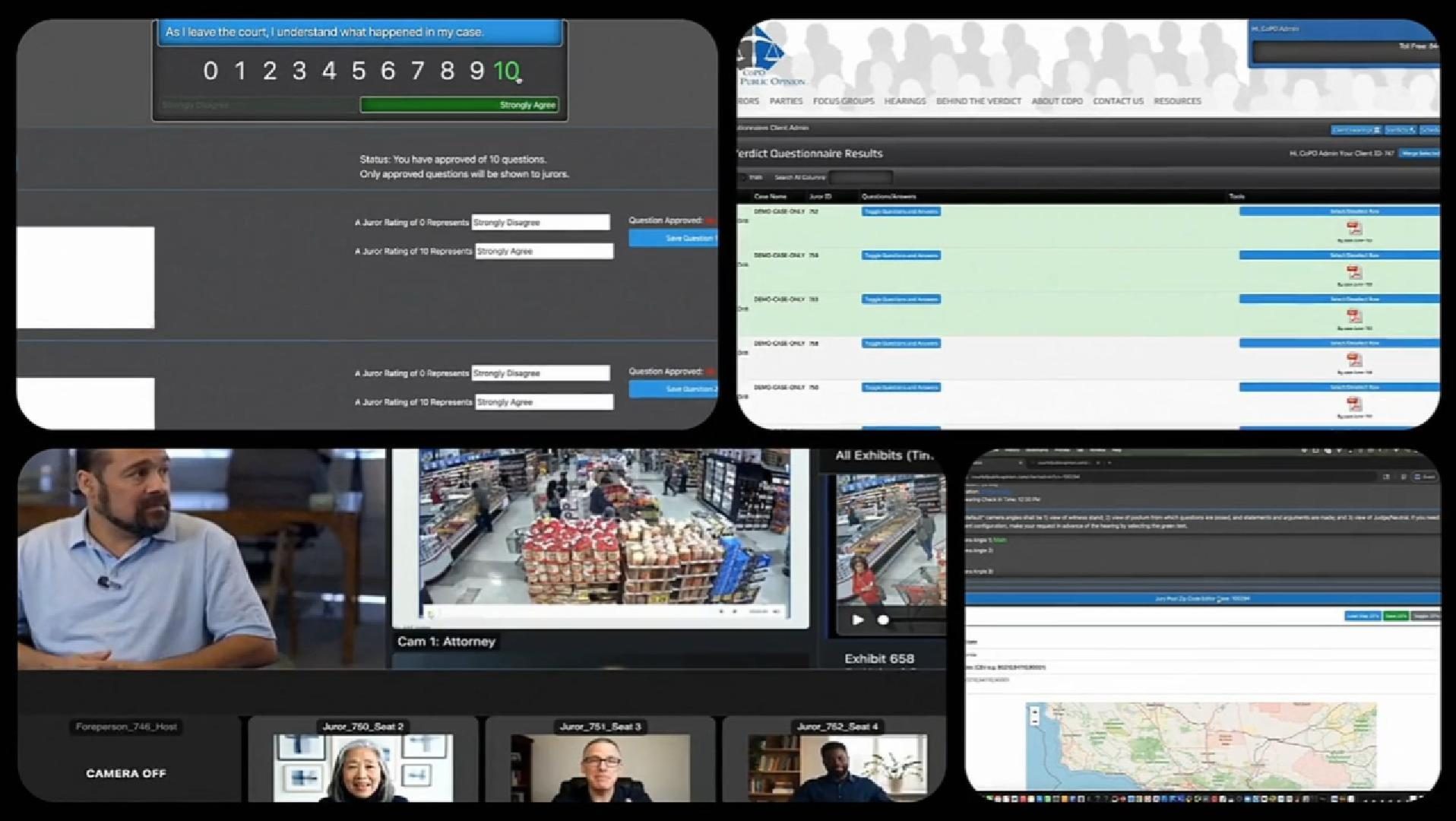
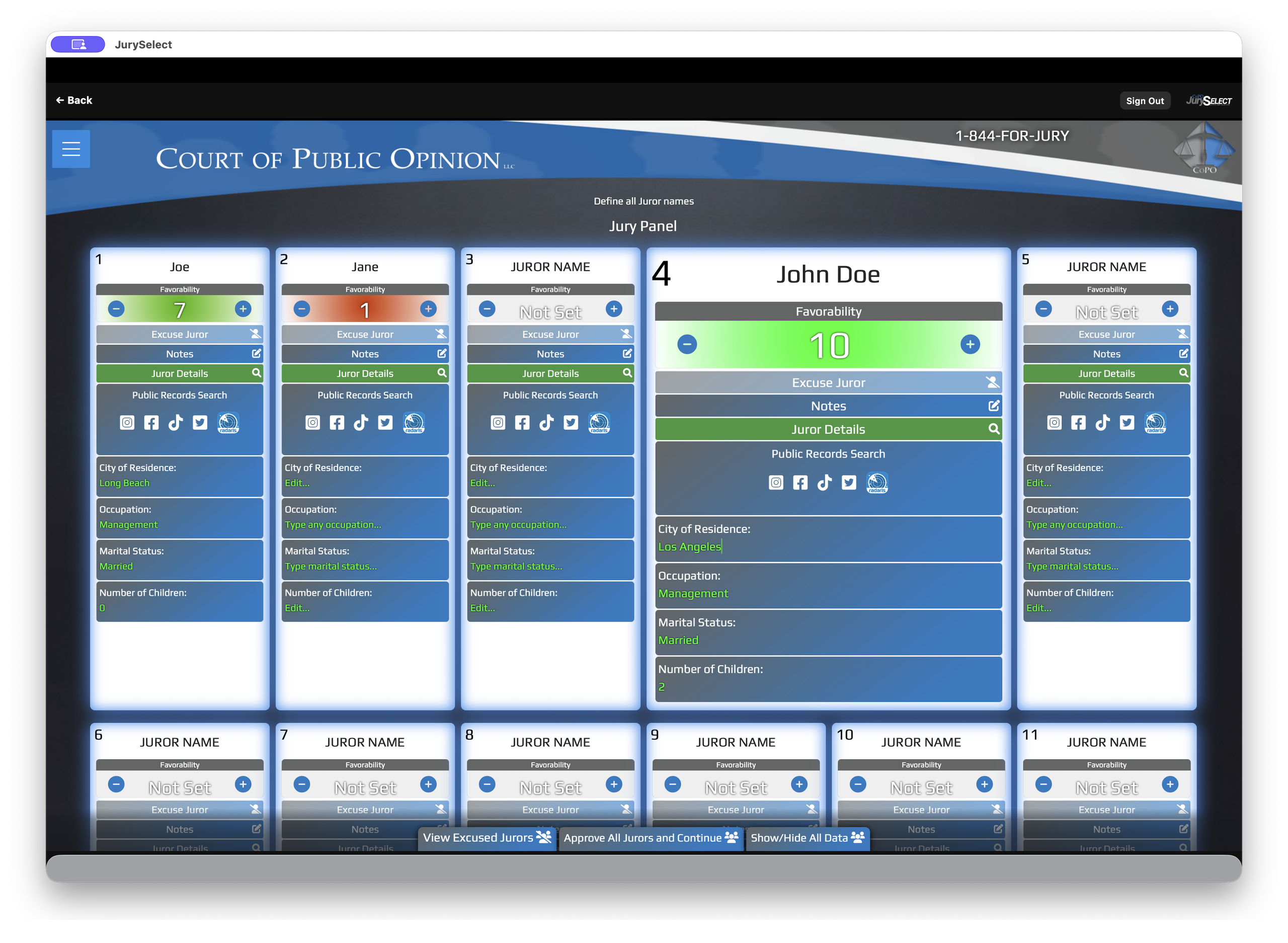
Traditional mock jury focus groups are expensive and slow. You assemble a group, rent a room, present your case, and wait weeks for a research report. Online jury testing through platforms like CoPO compresses that timeline and allows attorneys to test specific arguments, witnesses, or themes with a much larger sample of participants across different demographics.
The advantage is not just speed. It is the ability to run multiple iterations of your case narrative and measure which framings resonate, which evidence gets dismissed, and which jurors disconnect from your theory of the case before you have spent a single night in trial.
What Attorneys Actually Learn From Jury Feedback
Firms that use structured mock jury testing consistently report finding gaps in their case that are embarrassingly obvious in hindsight. A key witness who comes across as rehearsed. A damages argument that relies on context the jury does not have. A legal theory that sounds correct to a judge but confusing to a ordinary citizen.
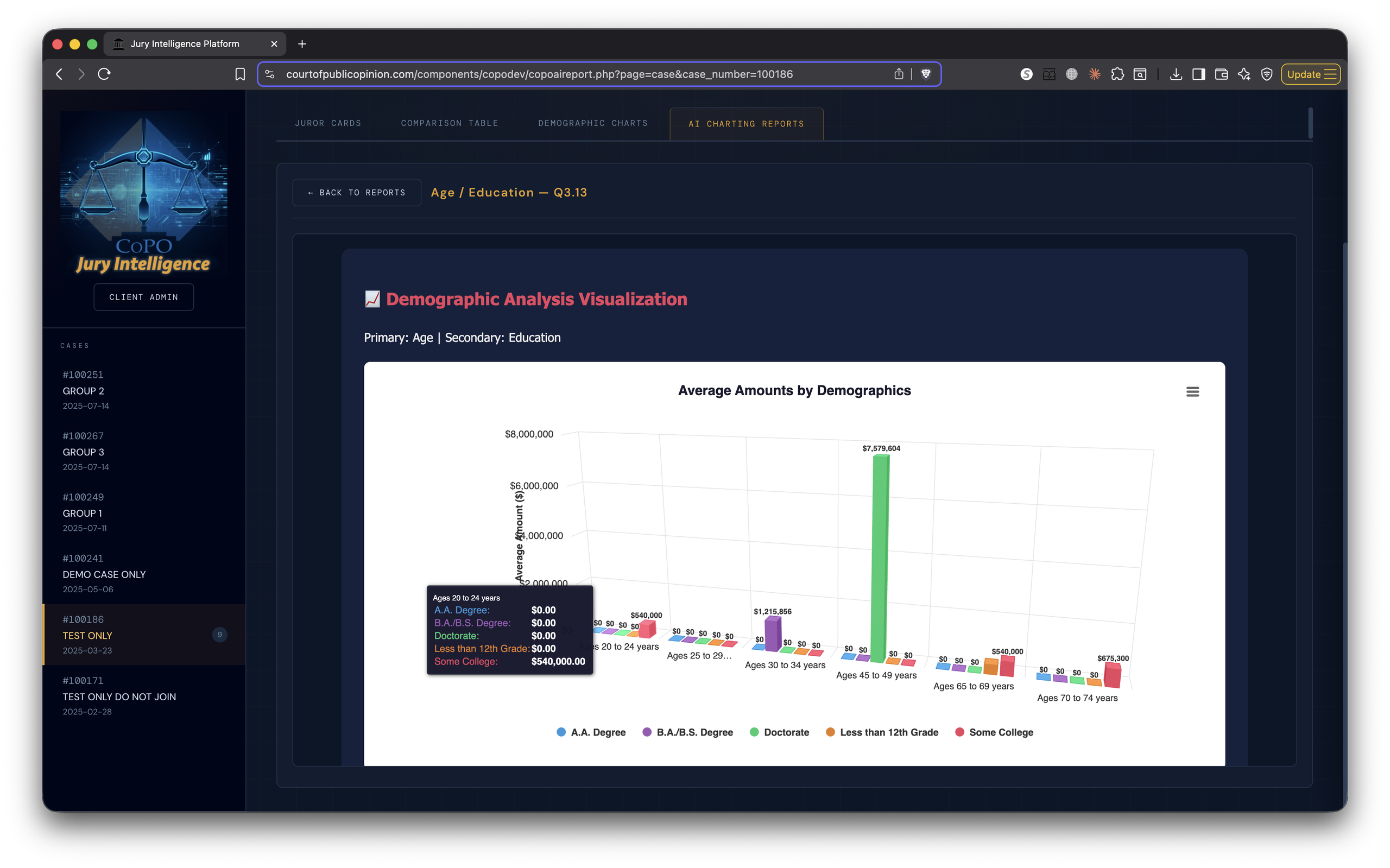
These are not small problems if your entire trial strategy rests on them. Jury feedback from online testing reveals exactly what an attorney will face when twelve strangers walk into a courtroom and start evaluating your client like strangers on the street.
The Limits of Intuition in Trial Strategy
Experienced trial attorneys develop instincts about how jurors will respond, and those instincts are valuable. But instincts are not data. When two attorneys from the same firm look at the same evidence and disagree about which argument will land, you need something more than seniority to resolve that dispute. You need a test.
That is the core argument for pre-trial jury research. Litigation is expensive, outcomes are consequential, and the cost of being wrong is measured in verdicts that can run into the tens of millions of dollars. A few thousand dollars in mock jury testing is not a luxury. It is risk management.
Where Jury Perception Meets Litigation Strategy
The attorneys who are already using online jury testing are not doing it because they lack trial experience. They are doing it because they have enough experience to know that their own perception of their case is probably skewed in ways they cannot see without external feedback. The best trial lawyers are the ones who know how to stress-test their own arguments before someone else does it for them.
Platforms like CoPO make that kind of pre-trial research accessible to firms of almost any size. The goal is simple: find out how actual jurors respond to your actual case, so you can walk into trial knowing what you are working with.
Frequently Asked Questions
What is the difference between a mock jury and an advisory jury?
A mock jury is a voluntary pre-trial feedback session where attorneys test case themes and evidence outside of court. An advisory jury is a group empaneled by a judge during trial to provide guidance on factual questions, but whose verdict is not binding. Both serve different purposes, but both ultimately measure jury perception.
How does online jury testing work?
Online platforms like CoPO allow attorneys to present case materials, witness testimony summaries, and legal arguments to a pool of participants who evaluate them using verdict forms designed to capture how they would rule and why. Results are compiled and analyzed to identify weak points in the case narrative.
Can jury testing predict actual verdicts?
Jury testing cannot guarantee a specific outcome, but it reliably identifies which arguments are working, which witnesses are persuading, and where juror confusion or skepticism is likely to appear. That information directly shapes trial strategy, witness preparation, and jury selection.
When should attorneys use mock jury testing?
The earlier the better, but most firms use it during case development and again after key developments like depositions, expert reports, or major rulings. Even mid-trial, checking juror perception through informal polling can reveal whether your narrative is landing as intended.
Is jury testing only for plaintiff attorneys?
No. Defense attorneys face the same perception problem. The question is not which side benefits, but whether you understand how a jury is likely to receive your specific case. Defense strategy can be just as damaged by juror confusion or bias as plaintiff strategy.
Conclusion
The gap between what attorneys know about their case and what jurors actually think about it is one of the most consistent sources of preventable trial losses. Online jury testing platforms like CoPO exist to close that gap, giving litigators the feedback they need to sharpen their narrative, prepare their witnesses, and walk into court with a strategy built on something moresolid than intuition alone.
Whether you are handling a high-profile dispute with socially explosive dynamics or a complex commercial case, the principle is the same: you cannot afford to skip the step of knowing how your case looks through a juror’s eyes. The verdict starts forming long before opening statements. Your pre-trial research should start earlier.